549 Detronyx UART Trace Exerciser
549 : Detronyx UART Trace Exerciser
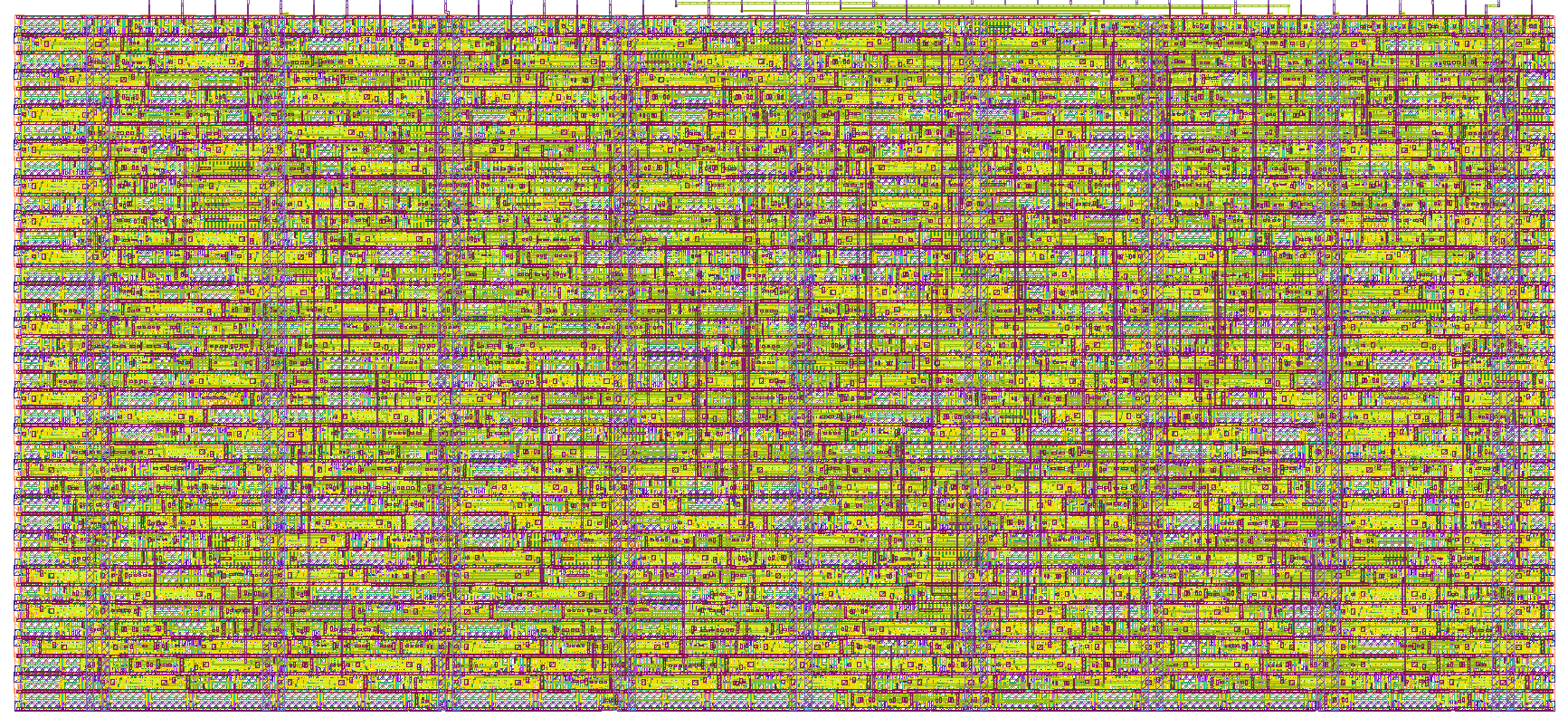
- Author: Detronyx contributors
- Description: UART-controlled pattern generator and streaming trace/event analyzer
- GitHub repository
- Open in 3D viewer
- Open in Tiny Tapeout Explorer
- Clock: 50000000 Hz
How it works
Detronyx UART Trace Exerciser is a 1x1 digital bring-up tile. It exposes eight
trace probe inputs on ui_in[7:0], eight generated pattern outputs on
uo_out[7:0], and a UART control/status link on uio[0]/uio[1].
The trace side samples ui_in[7:0] at a programmable interval. When any masked
bit changes while tracing is armed and streaming is enabled, the tile emits a
four-byte UART trace packet:
0xe1 sample delta changed_mask
delta is an 8-bit saturated count of sample ticks since the previous emitted
event. If a second event arrives while a previous trace event is still waiting
to be transmitted, the event is dropped and the overflow/drop counters update.
This keeps the design small and predictable for a single TTGF tile.
The pattern side drives uo_out[7:0] with one of eight modes:
0 hold pattern_a
1 incrementing counter
2 walking one
3 8-bit LFSR
4 inverted pattern_a
5 mirror trace probe inputs
6 trace probe inputs XOR pattern_a
7 trace probe inputs XOR pattern_a
The project config targets the AvalonSemiconductors
gf180mcu_as_sc_mcu7t3v3 GF180 native-3.3 V standard-cell library.
UART protocol
Default UART settings are 115200 baud, 8 data bits, no parity, 1 stop bit, with
a 50 MHz clk. The UART bit divider is the top-level BAUD_RELOAD parameter;
the default is 433, which gives 434 clock cycles per bit at 50 MHz. For a
different system clock, set BAUD_RELOAD to round(clock_hz / baud) - 1.
Most commands are two bytes: command, then argument. They do not ACK, to avoid polluting the trace stream.
0x10 mask    set trace bit mask
0x11 div     set trace sample divider; low 4 bits used, 0 samples every clock
0x12 ctrl    bit0 arm, bit1 stream enable, bit2 clear counters/errors, bit3 snapshot
0x20 mode    set pattern mode, low three bits used
0x21 div     set pattern update divider; low 6 bits used
0x22 value   set pattern_a
Single-byte commands:
0x30         emit status packet
0x31         emit ping/version packet
Status packets are:
0xa5 status event_count drop_count
Ping packets are:
0xd7 0x54 0x01 status
The status byte is:
bit7 overflow
bit6 uart_rx_error
bit5 trace_packet_pending
bit4 stream_enabled
bit3 trace_armed
bit2..0 pattern_mode
Pinout
ui_in[7:0]   trace probes
uo_out[7:0]  generated pattern
uio[0]       UART RX input
uio[1]       UART TX output
uio[2]       trace armed status
uio[3]       stream enabled status
uio[4]       UART/packet busy status
uio[5]       trace overflow status
uio[6]       UART RX framing error sticky status
uio[7]       toggles on every accepted trace event
How to test
Run the local RTL simulation from the TTGF experiment directory:
make sim-trace-exerciser
The test configures the pattern generator over UART, arms trace streaming, changes a probe input, checks the emitted trace packet, and then requests a status packet.
External hardware
No required external hardware beyond a UART adapter or host MCU. For a simple
demo, loop selected uo_out pattern pins back into ui_in trace probe pins and
watch the trace packets on uio[1].
IO
| # | Input | Output | Bidirectional |
|---|---|---|---|
| 0 | trace_probe[0] | pattern[0] | uart_rx |
| 1 | trace_probe[1] | pattern[1] | uart_tx |
| 2 | trace_probe[2] | pattern[2] | trace_armed |
| 3 | trace_probe[3] | pattern[3] | stream_enabled |
| 4 | trace_probe[4] | pattern[4] | uart_busy |
| 5 | trace_probe[5] | pattern[5] | trace_overflow |
| 6 | trace_probe[6] | pattern[6] | uart_rx_error |
| 7 | trace_probe[7] | pattern[7] | event_toggle |