421 TinyTapeout-Processor2
421 : TinyTapeout-Processor2
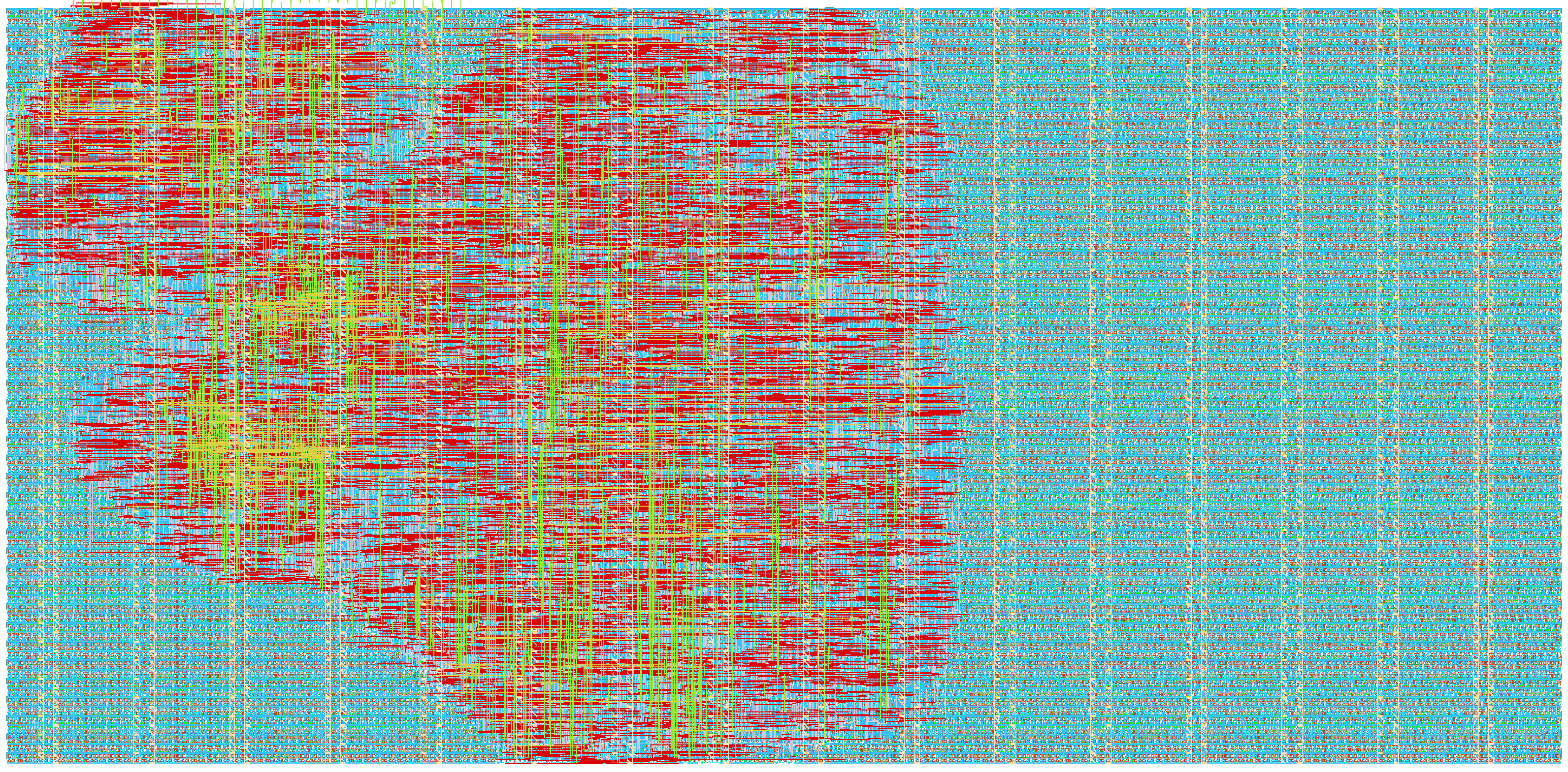
- Author: Matei Chiriac
- Description: It is a design of a processor
- GitHub repository
- Open in 3D viewer
- Open in Tiny Tapeout Explorer
- Clock: 0 Hz
How it works
This project implements a custom 8-bit RISC processor with a 3-stage pipeline (Fetch → Decode → Execute).
Architecture
- Register file: 8 general-purpose 8-bit registers (R0–R7), all reset to 0
- Program memory (ROM): 32 × 16-bit instructions, loaded at runtime via serial interface
- Data memory (RAM): 16 × 8-bit bytes
- ALU operations: ADD, SUB, AND, OR, XOR, SHL, SHR, CMP
- Pipeline stages: FETCH → DECODE → EXECUTE (3 clock cycles per instruction)
- Status flags: Zero (Z), Carry (C), Negative (N)
Instruction Set (16-bit encoding)
| Opcode | Mnemonic | Operation |
|---|---|---|
0x0 |
ADD Rd, Rs1, Rs2 |
Rd = Rs1 + Rs2 |
0x1 |
SUB Rd, Rs1, Rs2 |
Rd = Rs1 − Rs2 |
0x2 |
AND Rd, Rs1, Rs2 |
Rd = Rs1 & Rs2 |
0x3 |
OR Rd, Rs1, Rs2 |
Rd = Rs1 | Rs2 |
0x4 |
XOR Rd, Rs1, Rs2 |
Rd = Rs1 ^ Rs2 |
0x5 |
SHL Rd, Rs1 |
Rd = Rs1 << 1, Carry = bit shifted out |
0x6 |
SHR Rd, Rs1 |
Rd = Rs1 >> 1, Carry = bit shifted out |
0x7 |
LDI Rd, #imm8 |
Rd = 8-bit immediate value |
0x8 |
LOAD Rd, [Rs1] |
Rd = RAM[Rs1 & 0xF] |
0x9 |
STORE Rd, [Rs1] |
RAM[Rs1 & 0xF] = Rd |
0xA |
JMP addr |
PC = addr (5-bit, range 0–31) |
0xB |
JZ addr |
if Z=1 then PC = addr |
0xC |
JNZ addr |
if Z=0 then PC = addr |
0xD |
CMP Rd, Rs1 |
set flags based on Rd − Rs1 (no write) |
0xE |
OUT Rd |
uo_out = Rd |
0xF |
IN Rd |
Rd = ui_in |
Instruction word layout
Bit:  15 14 13 12 | 11 10  9 |  8  7  6 |  5  4  3 |  2  1  0
      [  OPCODE  ] [   Rd   ] [  Rs1   ] [  Rs2   ] [  000  ]

Special cases:
  LDI  : [15:12]=0x7, [11:9]=Rd, [8]=0,  [7:0]=imm8
  JMP  : [15:12]=0xA, [11:5]=0,  [4:0]=addr5
  JZ   : [15:12]=0xB, [11:5]=0,  [4:0]=addr5
  JNZ  : [15:12]=0xC, [11:5]=0,  [4:0]=addr5
  OUT  : [15:12]=0xE, [11:9]=Rs, [8:0]=0
  IN   : [15:12]=0xF, [11:9]=Rd, [8:0]=0
Pin mapping
| Pin | Direction | Description |
|---|---|---|
ui_in[7:0] |
Input | Program byte during load / data for IN instruction |
uo_out[7:0] |
Output | Result of OUT instruction |
uio_in[0] |
Input | load_mode: 1 = loading program, 0 = executing |
uio_in[1] |
Input | load_valid: rising edge loads one byte |
uio_out[2] |
Output | Flag Zero (Z) |
uio_out[3] |
Output | Flag Carry (C) |
uio_out[4] |
Output | Flag Negative (N) |
How to test
Step 1 — Reset
Assert rst_n = 0 for at least 1 clock cycle, then set rst_n = 1.
All registers, flags and PC are cleared to 0.
Step 2 — Load a program
- Set
uio_in[0] = 1(load mode — CPU is held at reset, ROM write enabled) - For each 16-bit instruction (in order, starting from address 0):
- Put the high byte
[15:8]onui_in[7:0], pulseuio_in[1]high then low - Put the low byte
[7:0]onui_in[7:0], pulseuio_in[1]high then low
- Put the high byte
- Set
uio_in[0] = 0— CPU starts executing from PC = 0
Step 3 — Example program: counter 0 → 9, looping forever
; R1 = counter (0..9)
; R2 = step = 1
; R3 = limit = 10

LDI R1, #0      ; addr 0
LDI R2, #1      ; addr 1
LDI R3, #10     ; addr 2
OUT R1           ; addr 3  <-- loop start
ADD R1, R1, R2  ; addr 4  R1 = R1 + 1
CMP R1, R3      ; addr 5  flags = R1 - R3
JNZ 3            ; addr 6  if R1 != R3, jump back to OUT
JMP 0            ; addr 7  restart (R1=10, reset to 0)
Byte sequence to load (high byte first per instruction):
| Addr | Instruction | High | Low | Binary (16-bit) |
|---|---|---|---|---|
| 0 | LDI R1, #0 |
0x72 |
0x00 |
0111 001 0 0000 0000 |
| 1 | LDI R2, #1 |
0x74 |
0x01 |
0111 010 0 0000 0001 |
| 2 | LDI R3, #10 |
0x76 |
0x0A |
0111 011 0 0000 1010 |
| 3 | OUT R1 |
0xE2 |
0x00 |
1110 001 000 000 000 |
| 4 | ADD R1,R1,R2 |
0x02 |
0x50 |
0000 001 001 010 000 |
| 5 | CMP R1, R3 |
0xD2 |
0xC0 |
1101 001 011 000 000 |
| 6 | JNZ 3 |
0xC0 |
0x03 |
1100 0000 0000 0011 |
| 7 | JMP 0 |
0xA0 |
0x00 |
1010 0000 0000 0000 |
Step 4 — Read outputs
| Signal | What to observe |
|---|---|
uo_out[7:0] |
Shows 0x00 → 0x01 → ... → 0x09 → 0x00 cycling |
uio_out[2] (Z flag) |
Goes high when result = 0 |
uio_out[3] (C flag) |
Goes high on carry/borrow |
uio_out[4] (N flag) |
Goes high when result MSB = 1 |
External hardware
No external hardware required. All I/O uses the standard TinyTapeout pin interface.
Optionally, connect a microcontroller or logic analyser to ui_in / uio_in to automate program loading and capture uo_out results.
IO
| # | Input | Output | Bidirectional |
|---|---|---|---|
| 0 | DATA_IN bit 0 (program byte / IN instruction) | DATA_OUT bit 0 (result of OUT instruction) | LOAD_MODE input (1=load program, 0=execute) |
| 1 | DATA_IN bit 1 | DATA_OUT bit 1 | LOAD_VALID input (rising edge loads one byte) |
| 2 | DATA_IN bit 2 | DATA_OUT bit 2 | FLAG_ZERO output (ALU result = 0) |
| 3 | DATA_IN bit 3 | DATA_OUT bit 3 | FLAG_CARRY output (arithmetic carry/borrow) |
| 4 | DATA_IN bit 4 | DATA_OUT bit 4 | FLAG_NEG output (ALU result negative) |
| 5 | DATA_IN bit 5 | DATA_OUT bit 5 | |
| 6 | DATA_IN bit 6 | DATA_OUT bit 6 | |
| 7 | DATA_IN bit 7 | DATA_OUT bit 7 |