435 LoRa Edge SoC
435 : LoRa Edge SoC
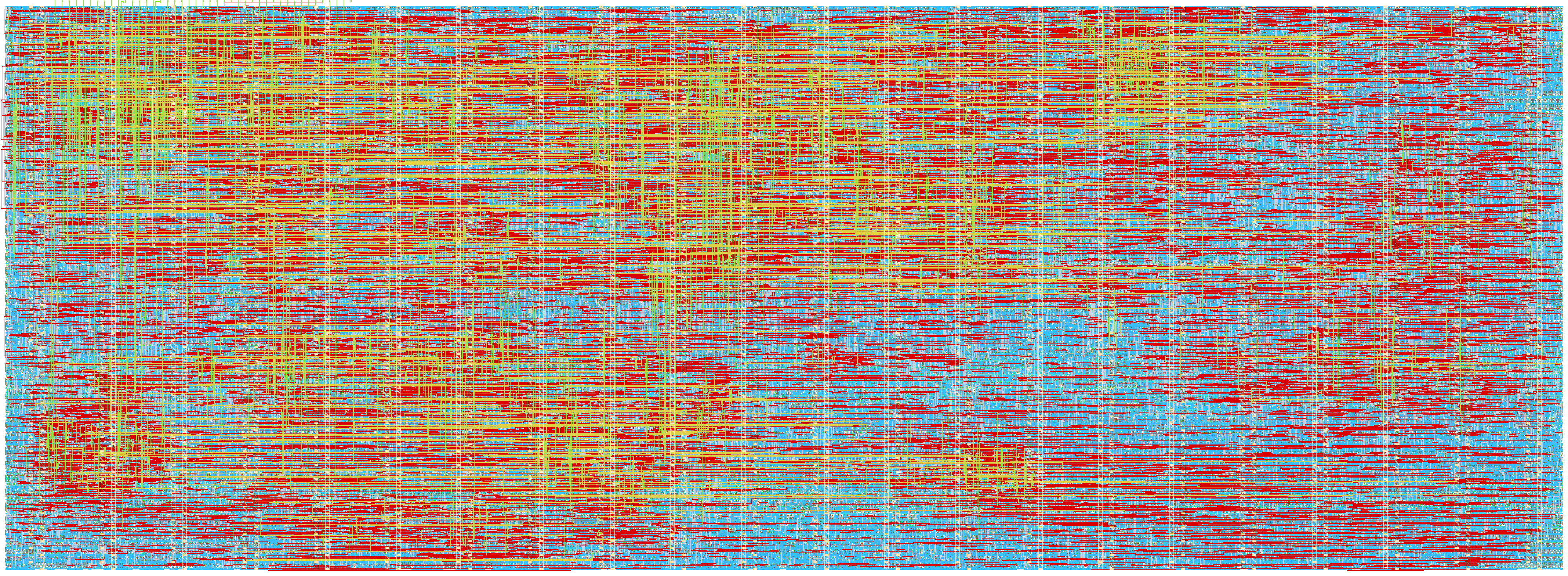
- Author: TechHU-GS
- Description: RISC-V LoRa node SoC with CRC16, I2C, WDT, RTC, Seal peripherals
- GitHub repository
- Open in 3D viewer
- Open in Tiny Tapeout Explorer
- Clock: 25000000 Hz
How it works
LoRa Edge SoC is a RISC-V (RV32EC) based system-on-chip designed for LoRa IoT edge nodes. It integrates the TinyQV bit-serial CPU running at 25MHz with 8 custom peripherals:
- CRC16 engine with hardware acceleration (shared between CPU and Seal)
- I2C master (Forencich AXI Stream core) for sensor communication
- SPI master for SX1268 LoRa transceiver control
- Watchdog timer with configurable timeout
- RTC counter with 1-second resolution
- Seal register with monotonic counter for tamper detection
- Countdown timer with microsecond resolution and IRQ
- Latch-based memory (32 bytes on-chip SRAM)
The CPU fetches instructions from external QSPI Flash and uses QSPI PSRAM for data storage. All peripherals are memory-mapped at 0x8000000.
How to test
- Connect QSPI Flash (with firmware) and PSRAM to the bidirectional pins
- Connect a USB-UART adapter to UART TX (uo[0]) and RX (ui[7]) at 115200 baud
- After reset, the CPU boots from Flash and outputs POST messages via UART
- Peripherals can be tested via firmware: I2C sensor reads, SPI LoRa transactions, watchdog kicks, RTC time queries
External hardware
- QSPI Flash (e.g., W25Q128) — connected to uio[0:5] for instruction/data storage
- QSPI PSRAM (e.g., APS6404L) — connected to uio[6:7] for data memory
- SX1268 LoRa module — connected to SPI (uo[3:5], ui[2]) and control pins (uo[1], ui[0:1])
- I2C sensors — connected to SCL (uo[2]) and SDA (uo[6], ui[3]) with 4.7K pullups
- GPS module (optional) — 1PPS output to ui[4]
IO
| # | Input | Output | Bidirectional |
|---|---|---|---|
| 0 | SX1268 DIO1 (IRQ) | UART TX | Flash CS |
| 1 | SX1268 BUSY | SX1268 RESET | SD0 |
| 2 | SPI MISO | I2C SCL | SD1 |
| 3 | I2C SDA in | SPI MOSI | SCK |
| 4 | 1PPS input | SPI CS | SD2 |
| 5 | GPIO in (spare) | SPI SCK | SD3 |
| 6 | GPIO in (spare) | I2C SDA out | RAM A CS |
| 7 | UART RX | LED GPIO | RAM B CS |